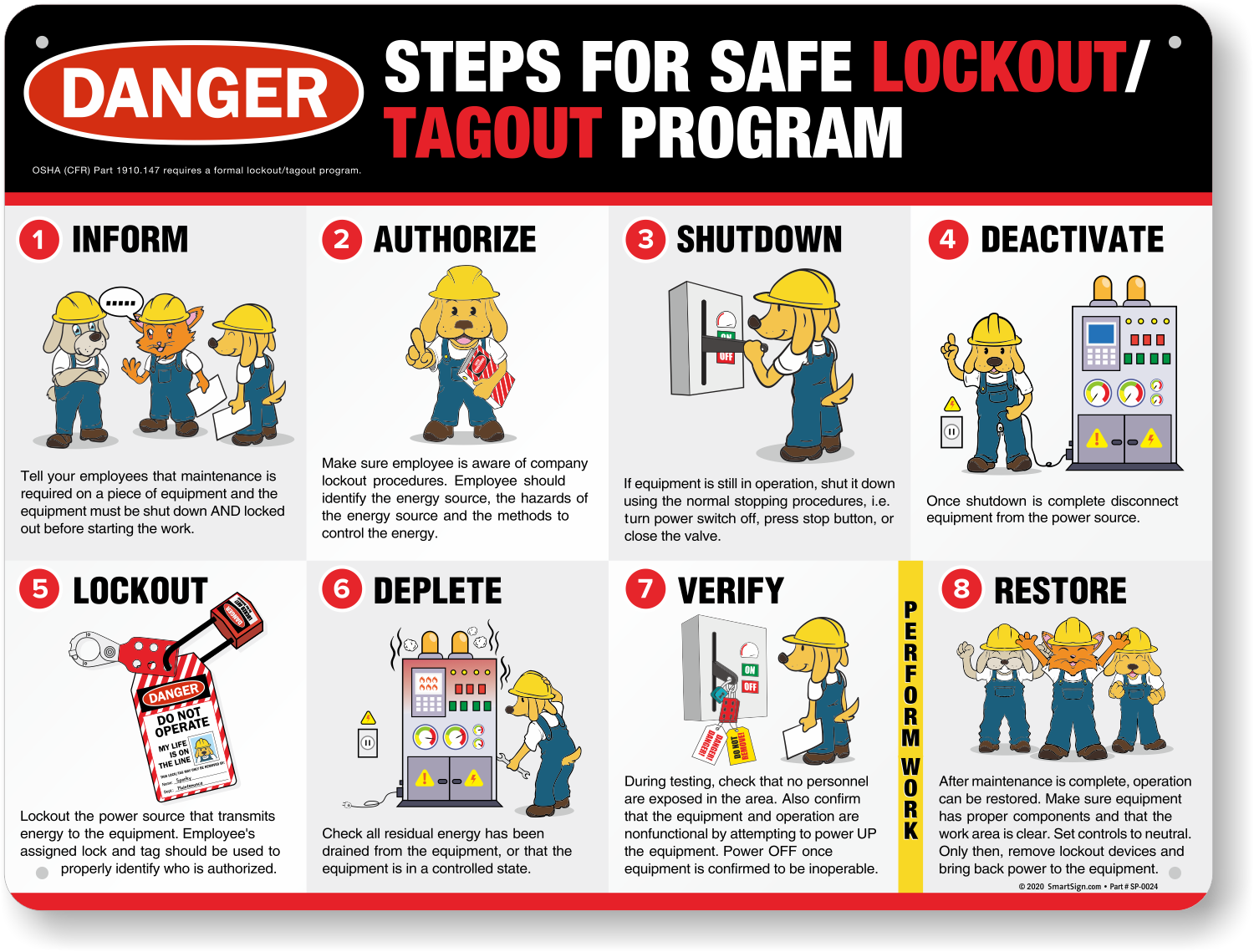
Equipment doesn’t warn you before it starts. A press, conveyor, or motor can activate unexpectedly during maintenance, turning a routine repair into a life-altering incident. That’s where lock out tag out (LOTO) instructions become non-negotiable. They’re not just paperwork—they’re a sequence of deliberate actions that isolate hazardous energy and keep workers alive.
Despite clear OSHA standards, improper energy control causes nearly 10% of serious industrial accidents. Most stem from incomplete procedures, unauthorized bypassing, or misunderstood instructions. This guide cuts through the confusion with precise, actionable LOTO instructions that reflect real-world conditions—not just regulatory theory.
What Are Lock Out Tag Out Instructions?
Lock out tag out instructions are documented, step-by-step processes that outline how to safely shut down, isolate, lock, and tag machinery or equipment before service or maintenance. They specify the sequence of actions, required tools, authorized personnel, and verification steps necessary to control hazardous energy sources.
These instructions differ from general safety policies. They’re equipment-specific, detailed, and designed for immediate use in the field. For example, LOTO instructions for a hydraulic press won't apply to a centrifuge—each carries unique energy types (mechanical, pneumatic, electrical) and isolation points.
At their core, LOTO instructions answer three questions: - Which energy sources must be controlled? (electrical, thermal, chemical, etc.) - Where are the isolation points? (disconnect switches, valves, bleed points) - Who is responsible at each stage? (authorized employee, servicing technician)
Without accurate instructions, even trained personnel risk mistakes that compromise safety.
Why Standardized LOTO Instructions Matter
Assumptions kill. A technician skips a bleed valve because “it’s never been live before.” A supervisor removes a lock thinking maintenance is complete. These aren’t edge cases—they’re documented causes of amputations, electrocutions, and fatalities.
Standardized LOTO instructions eliminate guesswork. They enforce consistency across shifts, contractors, and equipment changes. More importantly, they create legal and operational accountability.
OSHA’s 29 CFR 1910.147 mandates that employers establish “written energy control procedures.” But compliance isn’t just about avoiding citations. It’s about creating a culture where every worker knows: - How to lock out equipment correctly - That no one overrides a lock without verification - That tags are not just labels—they’re warnings backed by policy
When instructions are vague or missing, compliance erodes. A study by the National Institute for Occupational Safety and Health (NIOSH) found that 60% of LOTO-related incidents occurred on machines without documented procedures.
Key Components of Effective LOTO Instructions
Not all LOTO instructions are created equal. Weak instructions use vague language like “turn off power” or “isolate machine.” Strong instructions are precise, visual, and enforceable. Here’s what they must include:
1. Equipment Identification Clearly name the machine or system. Include model numbers, location, and energy types involved. Example: “Hydraulic Shear Press, Line 3, North Facility – Electrical (480V), Hydraulic (2,500 psi)”
2. Step-by-Step Shutdown Sequence List actions in order:
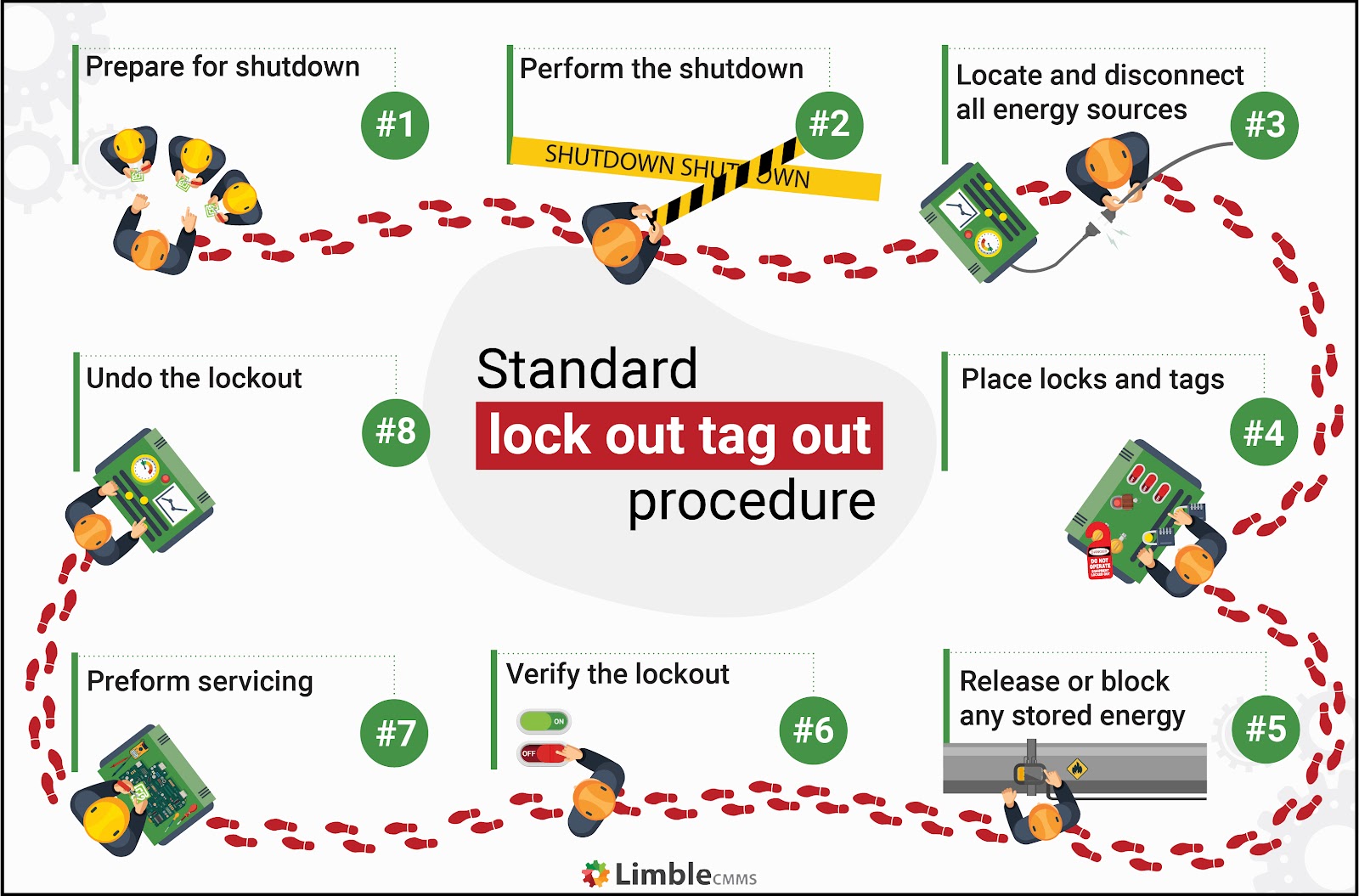
- Notify affected personnel
- Shut down via control panel
- Open main disconnect switch (NEMA 4, 300A)
- Close and lock hydraulic isolation valve (DN50, Manual Lever)
- Open bleed valve to release residual pressure
3. Isolation Points with Visual Aids Use photos, diagrams, or QR codes linked to digital schematics. Mark lockable points with durable labels (e.g., “LOTO POINT – LOCK HERE BEFORE SERVICE”).
4. Lock and Tag Requirements Specify:
- Lock type (keyed-alike, keyed-different, group lockout box)
- Tag content (name, date, reason, contact)
- Number of locks allowed per employee
5. Verification of Zero Energy
This is where most failures occur. Instructions must require: - Attempting to start the machine (after isolation) - Using test instruments (voltage meters, pressure gauges) - Confirming no re-energization is possible
6. Restoration Procedure A common oversight. Re-energizing must be as controlled as shutdown: - Remove tools and guards - Confirm area is clear - Notify affected employees - Remove locks only by the applying individual
Common Mistakes in LOTO Instructions (And How to Fix Them)
Even organizations with LOTO programs make critical errors. Here are the most frequent—and how to correct them:
❌ Generic Instructions for Specific Machines Problem: One procedure used for all presses. Fix: Customize per machine. A robotic arm has pneumatic and electrical systems; a furnace adds thermal risk. Tailor every instruction.
❌ Omitting Stored Energy Problem: Failing to address capacitors, springs, or elevated parts. Fix: Add steps to dissipate stored energy—e.g., “Discharge DC bus capacitors using insulated screwdriver rated for 600V.”
❌ Allowing Group Lockout Without Clear Roles Problem: Multiple workers use one lock, creating confusion on restart. Fix: Use a group lockout box. Each worker applies their personal lock. The box holds the master key. Only when all locks are removed can the system restart.
❌ Skipping Verification Problem: Assuming “off” means “safe.” Fix: Mandate a “try-out” step: “After isolation, press start button to confirm no motion or energy response.”
❌ Poor Accessibility Problem: Instructions locked in an office or buried in a digital portal. Fix: Print and laminate instructions near equipment. Use scannable QR codes for updates.
Real-World Example: LOTO Instructions for a Conveyor System
Equipment: Roller Conveyor, Packaging Line B Energy Sources: Electrical (120V), Mechanical (belt tension), Gravity (incline section)
Step-by-Step Instructions:
- Notify all affected employees of upcoming maintenance.
- Shut down via local E-stop button. Confirm belt has stopped.
- Isolate power: Open circuit breaker (CB-7, Panel P2).
- Lock out: Apply personal lock to CB-7. Attach tag with name, date, and “Maintenance in Progress.”
- Release stored energy: Manually rotate rollers to relieve belt tension. Lower incline section using manual release lever.
- Verify zero energy: Attempt to restart via control panel. Confirm no response. Use voltage tester on motor leads.
- Begin service.
- Restore: After work, reposition guards, remove tools. Clear area. Notify team. Remove lock only after confirming safety.

This example isn’t theoretical—it’s drawn from an actual plant where a near-miss occurred due to uncontrolled belt tension. The revised instructions now include a photo of CB-7 and a checklist on the tag.
Digital Tools to Manage LOTO Instructions
Paper fades. Procedures evolve. Digital platforms streamline LOTO instruction management. These five tools help organizations maintain accuracy, compliance, and visibility:
| Tool | Key Features | Best For |
|---|---|---|
| LockOut/TagOut Pro by Seton | Pre-built templates, mobile access, barcode scanning | Mid-sized manufacturing |
| LOTO Manager by Brady | Digital workflows, audit trails, cloud sync | Facilities with multiple sites |
| FacilityRun | Integration with CMMS, real-time status tracking | Maintenance-heavy operations |
| EHS Insight | Full EHS suite with LOTO module, reporting | Enterprises needing compliance analytics |
| SafeSite Facility | Visual instructions, photo logs, contractor access | Plants using temporary labor |
These aren’t just document repositories. They turn static instructions into dynamic, auditable workflows. A technician scans a QR code, views the current LOTO steps, logs their lock application, and uploads a verification photo—creating a defensible record.
Training: Bridging the Gap Between Instructions and Action
Written instructions are useless without proper training. OSHA requires initial and annual retraining for both authorized and affected employees.
Effective training includes: - Hands-on practice with real equipment - Simulated breakdowns and lockout scenarios - Quizzes on procedure details (e.g., “Where is the bleed valve on Press 4?”) - Role-playing tag removal conflicts
One automotive parts plant reduced LOTO violations by 78% after introducing monthly drills. Workers weren’t just reading instructions—they were living them.
Also, train contractors. They account for 15% of LOTO-related fatalities. Your instructions must be clear enough for a temporary electrician from another company to follow safely.
Audits and Continuous Improvement
LOTO instructions aren’t “set and forget.” They require regular audits—at least annually, or after any incident or equipment change.
An effective audit checks: - Are instructions up to date with current machinery? - Are locks and tags in good condition? - Are employees following steps correctly? - Are verification steps consistently performed?
Use a simple checklist during walkthroughs. Observe a real lockout. Ask the technician to explain each step. If they hesitate, the instructions—or training—need refinement.
One food processing facility discovered that maintenance staff were skipping valve isolation because the instruction said “close valve” but didn’t specify it must be locked. A one-word edit—“close and lock”—changed behavior.
Final Thoughts: LOTO Instructions Save Lives
Lock out tag out instructions are the last line of defense between a technician and a thousand pounds of moving steel. They’re not bureaucratic formalities. They’re engineered safeguards—written with clarity, enforced with discipline, and reviewed with urgency.
Start by auditing your top five highest-risk machines. Are the instructions specific? Are they accessible? Do they include verification? If not, rewrite them now.
Post them visibly. Train your team. Audit monthly. Make every lock, every tag, every step a ritual of respect—for the machine, the process, and the person performing the work.
Because in the end, a well-written LOTO instruction isn’t just compliance. It’s a promise: No one gets hurt on my watch.
FAQ
What should you look for in Lock Out Tag Out Instructions: A Complete Safety Guide? Focus on relevance, practical value, and how well the solution matches real user intent.
Is Lock Out Tag Out Instructions: A Complete Safety Guide suitable for beginners? That depends on the workflow, but a clear step-by-step approach usually makes it easier to start.
How do you compare options around Lock Out Tag Out Instructions: A Complete Safety Guide? Compare features, trust signals, limitations, pricing, and ease of implementation.
What mistakes should you avoid? Avoid generic choices, weak validation, and decisions based only on marketing claims.
What is the next best step? Shortlist the most relevant options, validate them quickly, and refine from real-world results.