For months, Virginia’s political landscape has teetered on a judicial precipice. At the center: a voter-approved congressional map that, while born from a democratic process, now faces potential nullification by the state’s highest court. The Virginia Supreme Court is weighing whether to block a US House map that clearly favors Democrats—a decision that could upend not just the balance of power in Congress, but the very legitimacy of citizen-led redistricting efforts.
This isn’t just about partisan advantage. It’s about trust in institutions, the limits of judicial oversight, and whether a map validated by public referendum can still be undone by legal technicalities. The implications stretch far beyond Virginia’s borders, setting a precedent for how courts treat voter-approved reforms in an era of intense polarization.
A Map Born From Reform, Now Under Fire
Virginia’s current redistricting process was meant to be a corrective to decades of partisan gerrymandering. In 2020, voters approved a constitutional amendment to establish a bipartisan redistricting commission—tasked with drawing fairer legislative and congressional boundaries. When the commission deadlocked, control defaulted to the Virginia Supreme Court, which appointed special masters to draft maps.
The resulting congressional map—a product of court-appointed experts and ultimately ratified by voters in a statewide referendum—allocated 6 Democratic-favored seats and 5 Republican-favored seats in Virginia’s 11-district delegation. Analysts confirm the map leans Democratic, but not dramatically so, reflecting statewide voting patterns in recent federal elections.
Yet Republican lawmakers and conservative advocacy groups argue the map violates the state constitution’s requirement for “nondistorted” districts and “contiguous and compact” boundaries. Their lawsuit claims the map splits counties and cities in ways that dilute rural Republican votes, particularly in central and southwestern Virginia.
“Just because a map is voter-approved doesn’t make it legal,” said Richard E. Hall, counsel for the plaintiffs. “The constitution sets standards we can’t ignore for political convenience.”
The Judicial Dilemma: Uphold the Vote or Enforce the Law?
The Virginia Supreme Court now faces a thorny constitutional question: can a map pass legal muster simply because voters endorsed it, even if it may breach technical redistricting standards?
Historically, courts have intervened when maps violate constitutional principles, regardless of public approval. But striking down a voter-ratified map introduces a new tension—between judicial authority and democratic will.
Legal experts are divided. Some argue the court has a duty to act as a check on flawed processes, even when voters ratify the outcome. Others warn that invalidating a popular reform could erode public confidence in the entire redistricting system.
Consider this: if the court blocks the map, it may need to appoint new special masters or order a revised plan—potentially weeks before candidate filing deadlines. That risk of electoral chaos adds urgency to the decision.
Common pitfalls in such judicial interventions include: - Delayed timelines that disrupt election planning - Accusations of judicial overreach - Perception of partisan bias, regardless of the court’s reasoning - Inconsistent application of mapping standards
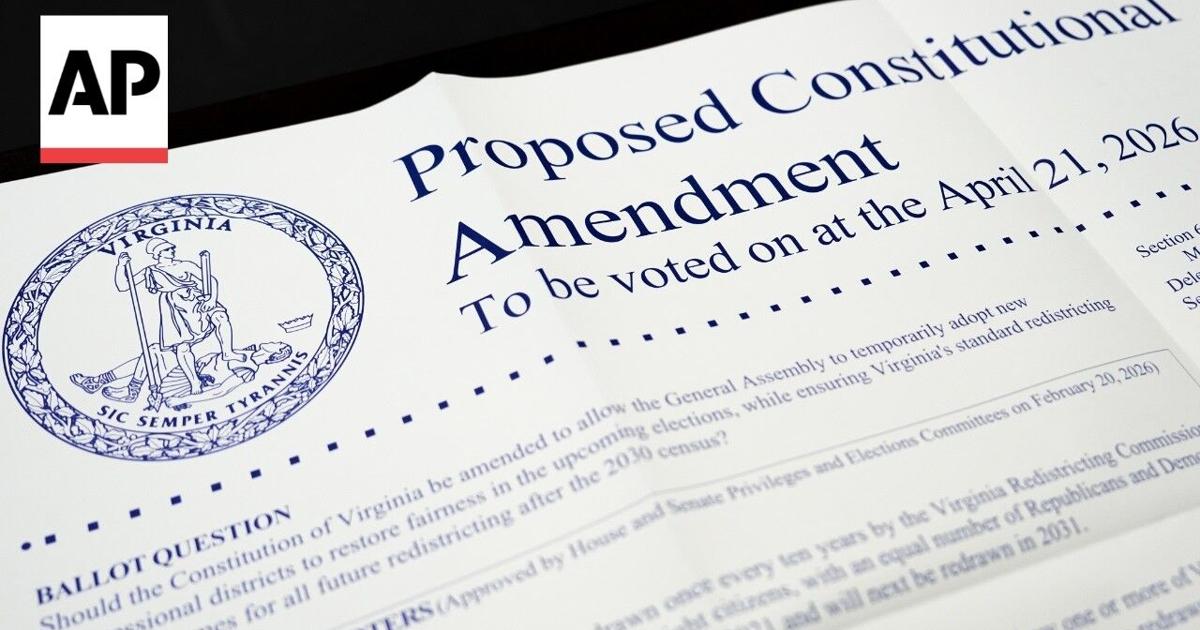
Proponents of the current map argue that minor boundary splits—common in any redistricting—don’t equate to unconstitutional distortion. They point out that Virginia’s diverse geography and population clusters (like Northern Virginia’s dense suburbs) make perfect symmetry impossible.
How the Map Favors Democrats—And Why It Might Stand
The current congressional map doesn’t rely on extreme gerrymandering. Instead, its Democratic lean emerges organically from where people live. Urban centers like Richmond, Norfolk, and especially the D.C. suburbs are heavily Democratic. Rural areas lean Republican. But because Democrats are more clustered in high-population zones, even a neutral mapping process tends to produce a slight efficiency gap—fewer wasted votes in packed urban districts.
In practical terms: - District 10 (Northern Virginia) is safely Democratic - District 11 (also Northern Virginia) leans strongly Democratic - District 8 (Arlington/Alexandria) is a Democratic stronghold - District 3 (Hampton Roads) and District 4 (Richmond/Petersburg) are Democratic-leaning urban cores - District 5 (stretching from Lynchburg to Danville) is competitive but trending Democratic under this map
The remaining six districts are Republican-favored, but several—like District 6 (Roanoke) and District 9 (Southwest Virginia)—are drawn tighter than in previous cycles, making them more vulnerable in wave elections.
This balance reflects current political reality. Virginia has not elected a Republican to federal office statewide since 2009. Presidential results since 2008 have favored Democrats in six of the past eight elections. The map, supporters argue, doesn’t create a Democratic advantage—it acknowledges it.
Past Precedents: When Courts Overturned Voter-Backed Maps
Virginia isn’t the first state where courts have clashed with voter-approved redistricting. In 2022, Ohio’s Supreme Court struck down multiple congressional maps despite support from Republican-led initiatives, citing unconstitutional partisan bias. Similarly, courts in Michigan and Colorado have invalidated maps drawn by citizen commissions for violating compactness or contiguity rules.
These cases reveal a pattern: courts are willing to step in when maps breach explicit constitutional language—even when backed by voters.
But there’s a key difference: Michigan and Colorado have independent redistricting commissions with clear guidelines. Virginia’s process is still evolving, and the current legal challenge hinges on ambiguous constitutional language like “not distorted” and “compact.”
“Ambiguity in the constitution invites litigation,” said Dr. Laura K. McKinin, a University of Richmond constitutional scholar. “When standards aren’t precise, outcomes depend more on judicial philosophy than clear law.”
That’s dangerous terrain. If the Virginia Supreme Court blocks this map, it may prompt calls for clearer redistricting standards—or even a constitutional convention to redefine the rules.
What’s at Stake Beyond Partisan Balance
While much of the debate centers on partisan outcomes, the deeper stakes involve governance and trust.
If the map is blocked: - The 2024 election cycle could face delays and legal scrambling - Voter confidence in citizen-led reform may erode - Future redistricting efforts could be paralyzed by fear of judicial reversal
If the map stands: - It sets a precedent that voter ratification carries weight, even with imperfections - It affirms the role of independent map-drawers (special masters) in breaking political deadlocks - It could encourage other states to adopt hybrid commission-court models
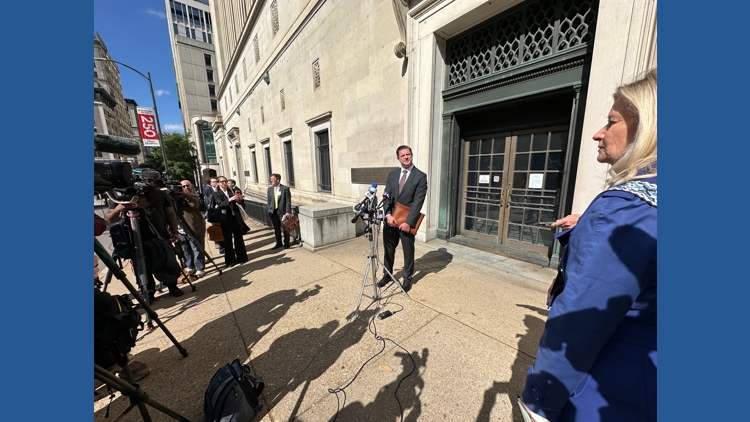
There’s also a messaging impact. Democrats can frame a court blockage as an undemocratic power grab—especially if the court’s majority is Republican-appointed. Conversely, Republicans may argue they’re defending constitutional integrity.
Realistically, no map is perfect. But the question isn’t whether this one is ideal. It’s whether it crosses the line into illegality.
The Road Ahead: What Happens Next?
The Virginia Supreme Court is expected to rule before the May 2024 candidate filing deadline. If the court upholds the map, elections will proceed as planned. If it’s blocked, the court may: - Reappoint the same special masters to revise the map - Appoint new experts - Order the legislature to draw a new plan (unlikely, given past deadlock)
Any delay risks compressing the campaign calendar. Candidates may file under one map, only to face redrawn districts weeks later—a scenario election officials want to avoid.
Workflow tip for campaigns and local parties: - Prepare district-specific messaging for both current and plausible alternative maps - Monitor court filings closely through the Virginia Judicial System’s eCase system - Engage with local election boards early to confirm filing procedures
The stakes are highest in swing districts like VA-5 and VA-7, where small boundary changes could shift competitiveness.
A Test for Democracy—and Its Guardians
This case isn’t just about lines on a map. It’s about who gets to draw them—and who decides when they’ve gone too far.
The Virginia Supreme Court now holds a mirror to the redistricting process. Will it reflect the will of the people, even when imperfectly expressed? Or will it enforce legal purity at the cost of democratic participation?
There’s no clean answer. But one thing is certain: whatever the court decides, it will shape Virginia’s political future for the next decade.
For citizens, the takeaway is clear. Engage early. Demand transparency. And understand that voting on a map is only the beginning—the real test is whether institutions respect that vote when it’s inconvenient.
What happens if the court blocks the map? The Virginia Supreme Court would likely appoint new special masters to draw a revised map, risking delays in the 2024 election cycle.
Does the current map violate the Virginia Constitution? Plaintiffs argue it does by splitting counties and cities, but supporters say these splits are minimal and necessary for population balance.
Why does the map favor Democrats? Because Democratic voters are concentrated in high-density urban and suburban areas, a neutral mapping process naturally results in more Democratic seats.
Can voters override the court’s decision? Not directly. Once a map is challenged in court, the judiciary has final authority under current law.
Has Virginia had fair maps before? Past maps were heavily gerrymandered by both parties. The current process was designed to end that cycle through bipartisan commission and court oversight.
Who drew the current map? After the redistricting commission deadlocked, the Virginia Supreme Court appointed special masters—nonpartisan experts in geography and law.
What’s the deadline for a ruling? A decision is expected by early May 2024 to avoid disrupting candidate filing and ballot preparation.
FAQ
What should you look for in Virginia Supreme Court Weighs Fate of Democratic-Favored House Map? Focus on relevance, practical value, and how well the solution matches real user intent.
Is Virginia Supreme Court Weighs Fate of Democratic-Favored House Map suitable for beginners? That depends on the workflow, but a clear step-by-step approach usually makes it easier to start.
How do you compare options around Virginia Supreme Court Weighs Fate of Democratic-Favored House Map? Compare features, trust signals, limitations, pricing, and ease of implementation.
What mistakes should you avoid? Avoid generic choices, weak validation, and decisions based only on marketing claims.
What is the next best step? Shortlist the most relevant options, validate them quickly, and refine from real-world results.