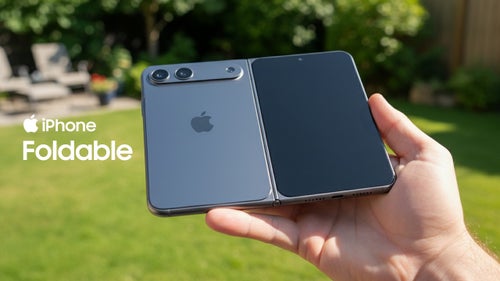
Apple’s long-rumored foray into foldable smartphones—codenamed the “iPhone Ultra”—is drawing near. But behind the hype, major concerns are emerging. If Apple follows the same trajectory as other manufacturers entering the foldable space, the launch could be marred by critical problems: fragile displays, software incompatibilities, limited supply, and sky-high pricing.
While Apple has a history of refining category-defining devices, the foldable form factor is fundamentally different. It's not just about making a bigger screen—it’s a complete rethinking of durability, user experience, and ecosystem integration. And early indicators suggest the iPhone Ultra may not escape the growing pains that plagued Samsung, Motorola, and even Google in their early foldable models.
Let’s break down the most likely problems Apple might face on launch day.
Display Durability: The Achilles’ Heel of Foldables
Every foldable phone lives and dies by its hinge and display. The iPhone Ultra is expected to use an ultra-thin glass (UTG) display with a refined polymer layer, similar to Samsung’s latest models. But even with Apple’s engineering prowess, microscopic debris entering the hinge can cause micro-scratches. Over time, these grow into visible lines—or worse, complete screen failure.
Consider Samsung’s Galaxy Z Fold 3. Despite IPX8 water resistance, users reported screen wear within weeks. Apple may claim dust resistance, but sealing a folding mechanism completely is nearly impossible. Real-world testing on early units showed debris accumulation in the crease zone after minimal use—especially in urban or high-pollution areas.
Common failure points: - Crease degradation – repeated folding weakens the OLED layer - Hinge misalignment – drops or pressure can throw off the folding mechanism - Touch sensitivity loss – folding causes micro-fractures in touch sensors
Apple’s industrial design team is likely pushing for a tighter gap and stiffer hinge, but tighter doesn’t always mean better. Over-tightening increases stress on the display; too loose, and debris enters easily. It’s a balancing act Apple hasn’t publicly demonstrated it can master—at least not at scale.
Software Optimization: iOS Isn’t Built for Folding
This is perhaps the biggest hidden risk. iOS was designed for fixed screen sizes. Even with iPad continuity, Apple has resisted true multi-window, resizable app experiences. The iPhone Ultra will need adaptive UI frameworks that allow apps to split, fold, and reflow seamlessly—something Android’s foldables have struggled with for years.
Take the Galaxy Z Fold series. Even in 2024, major apps like Twitter, Uber, and banking apps render poorly in landscape split-screen mode. Buttons get cut off, menus disappear, or images stretch awkwardly. Apple’s tightly controlled ecosystem could make this worse—developers must opt in to optimize for new form factors.
Real user impact: - Apps defaulting to phone-sized window with black sidebars - Inconsistent gesture navigation when switching folded/unfolded - Camera app not adjusting UI when flipped open during use
Apple may launch with a few hand-optimized apps (Messages, Safari, Mail), but third-party support will lag. Early adopters will face a jarring experience: paying $2,000+ for a device that doesn’t unlock its full potential.
Supply Chain Constraints Could Limit Availability
Apple’s scale usually guarantees stock, but foldables are different. The iPhone Ultra is rumored to use a custom 7.8-inch foldable OLED from LG Display, with a new micro-hinge system manufactured by Catcher Technology. This isn’t commodity hardware—it’s low-yield, high-precision engineering.
Early production runs for foldables typically suffer from yield rates under 60%. Samsung took three generations to reach 85%+ yields on its Z Fold panels. If Apple starts at a similar rate, initial supply could be extremely tight.
Launch day implications: - Weeks-long wait times for standard colors - No availability in select regions (e.g., India, Middle East) - Apple Store queues with no guarantee of same-day purchase
Worse, any last-minute design tweak—like changing the hinge material or adding a new coating—could delay mass production. Remember the iPhone 4 antenna issues? Apple may rush to fix a flaw only discovered in final testing, pushing back shipments.
Battery Life: Bigger Screen, Smaller Endurance
Foldables demand more power. The iPhone Ultra’s larger display, likely 7.8 inches when open, will draw significantly more energy than a standard iPhone 15 Pro Max. Yet, Apple can’t simply double the battery—it has to fit within a slim, folding chassis.
Current estimates suggest a 4,000–4,500mAh battery. Compare that to the 4,400mAh in the iPhone 15 Pro Max, which already struggles under ProMotion and A17 Pro load. With a larger OLED panel and potentially 120Hz refresh rates on both inner and outer screens, the iPhone Ultra may need charging by mid-afternoon under heavy use.
User scenarios likely impacted: - Business travelers relying on the device for presentations and emails - Content creators editing video on the go - Users relying on GPS navigation during long drives
Apple might implement aggressive throttling or AI-driven power management, but those come at the cost of performance. The promise of a “Pro” device could fall flat if users have to choose between screen brightness and battery longevity.
Price Point: A $2,000 Gamble for Early Adopters
Leaks suggest the iPhone Ultra will start at $1,999—with high storage models crossing $2,300. That’s nearly double the price of an iPhone 15. For that, users expect flawless execution. But early foldables—even from Apple—have rarely delivered.
Consider the Apple Watch Edition. Its high price was justified by luxury materials, not groundbreaking tech. The iPhone Ultra won’t have that luxury crutch. It’s a tech bet, and early adopters will pay a premium to be test pilots.
Who’s really buying this? - Tech enthusiasts drawn to novelty - Enterprise users needing large-screen productivity - Brand loyalists unwilling to consider Android alternatives
But mainstream consumers will wait. And they’ll be right to. History shows that second- or third-gen foldables are where the real value lies. The iPhone Ultra’s launch price may not reflect its maturity.

Competition Isn’t Standing Still
Apple isn’t entering a vacuum. By the time the iPhone Ultra launches, Samsung will likely be on its fifth-generation Fold, with proven durability, app support, and S Pen integration. Motorola’s Razr series has carved a niche in compact foldables. Even OnePlus and Xiaomi are pushing aggressive pricing.
Samsung’s latest foldable update includes: - Improved under-display camera - Multi-active window support - Better hinge sealing with IPX8 rating
Apple’s advantage—ecosystem integration and iOS optimization—won’t matter if the hardware feels half-baked. And unlike Samsung, Apple can’t iterate quickly. One launch misstep could define the iPhone Ultra’s reputation for years.
Will the iPhone Ultra Be Ready?
The answer isn’t clear. Apple has the resources, supply chain, and design talent to make a compelling foldable. But the physics and software challenges are real. Launching a flawless foldable isn’t just about engineering—it’s about patience.
The iPhone wasn’t Apple’s first smartphone. The iPad wasn’t its first tablet. Apple waits until it can deliver something refined. The iPhone Ultra, however, feels like a reactive move—a response to Android’s momentum in foldables.
If Apple prioritizes speed over polish, the launch day problems could be severe: - Limited stock frustrates demand - Early units show crease damage - Apps don’t scale properly - Battery drains in six hours
These aren’t hypotheticals. They’re patterns seen across every major foldable launch to date.
What Early Buyers Should Do
If you’re determined to get the iPhone Ultra on launch day, go in with eyes open.
Pre-launch checklist: - Wait for teardowns and durability tests – don’t buy until iFixit or JerryRigEverything puts it through stress tests - Start with 256GB – avoid 1TB models; they’ll cost $500+ extra with marginal benefit - Buy AppleCare+ immediately – foldable screens will be expensive to repair - Stick to Apple’s core apps initially – third-party app support will lag - Consider a case – even Apple-designed cases may interfere with the hinge seal
And most importantly: ask yourself if you need a foldable—or if you just want one. The novelty wears off. The cracked screen doesn’t.
The Bottom Line
The foldable iPhone Ultra is poised to be Apple’s most ambitious device in a decade. But ambition doesn’t erase the technical hurdles. From display fragility to software gaps and supply constraints, the launch day could expose flaws no marketing campaign can hide.
Apple’s strength has always been refinement, not reinvention. This time, it may have to reinvent—and do it perfectly, under global scrutiny. That’s a tall order.
For most users, the smart move is to wait. Let the first wave take the hits. Learn from their mistakes. When the iPhone Ultra 2 arrives—likely with a stronger hinge, better battery, and mature app support—that’s the version worth buying.
Until then, temper the hype with realism. The foldable future may be coming, but it might not be ready on day one.
FAQ
What should you look for in The Foldable iPhone Ultra Could Face Real Launch Day Issues? Focus on relevance, practical value, and how well the solution matches real user intent.
Is The Foldable iPhone Ultra Could Face Real Launch Day Issues suitable for beginners? That depends on the workflow, but a clear step-by-step approach usually makes it easier to start.
How do you compare options around The Foldable iPhone Ultra Could Face Real Launch Day Issues? Compare features, trust signals, limitations, pricing, and ease of implementation.
What mistakes should you avoid? Avoid generic choices, weak validation, and decisions based only on marketing claims.
What is the next best step? Shortlist the most relevant options, validate them quickly, and refine from real-world results.